How to use AI for your healthcare - a "how-to" guide
- Burt Rosen
- Jan 5
- 9 min read


Note: This is not really a post about me but it does use my data as examples. It's intended to help people understand how to use AI to better help themselves and those they care about. It's more of a how-to.
I wanted to warn you so you can stop reading here, but if you are interested, keep reading and share it with anyone that it can help. It's long.
I am not recommending that AI can replace your doctor, but, if used correctly, AI can become a valuable member of your care team and will make you more helpful to you doctor, and your doctor more helpful to you.
Ok, here we go.
I use AI. A lot. It helps me translate medical jargon, read reports, trend data, look for correlations between symptoms, treatments and therapies, manage symptoms and side effects, and has even helped me solve problems that my doctors won't deal with.
There are two main platforms that I use. There are many others, but these two are my two go-tos.
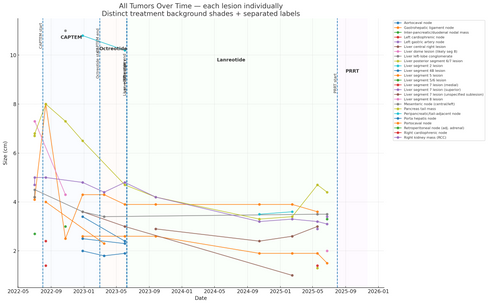
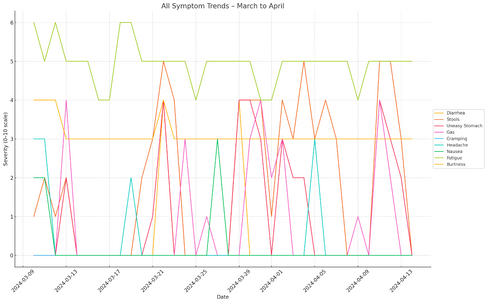
ChatGPT - I have used this the longest, and although it can frustrate me, it has been able to help me a ton in ways that my doctors can't. For example, I have trended my symptoms and my tumor growth overlaid with treatments. I have asked it to translate jargon, explain scans, trend blood test results and tumor sizes. Most of my examples in this post are from ChatGPT since I have used it the longest.
It's free to use, but setting up an account (even a free one) will let it save your chats and refer to them later so it get's smarter about you and will recommend things based on what it's learned about you. I find this worth it but not everyone will. For me, the more relevant I can make it and the more that what it tells me can be based on Burt, the more valuable it becomes! Don't forget, it says it keeps things private and there are settings you can use, but its not HIPAA compliant. So if you use this, you need to understand how it protects your data and conversations.
Note: ChatGPT is NOT HIPAA compliant. See the definition of HIPAA in the MyDoctorFriend section below.
Note: it knows me, my sense of humor, my sarcasm, my directness. I am a native NYer and I want it to talk to me like that. You can specify the tone that you want it to take with you. You might see sarcasm in some of my examples so I wanted to explain that it's because of me, not because of it.
Here are two examples of some of the more interesting ways I have used ChatGPT (at least I find them interesting!) and things it has generated for me:


MyDoctorFriend (MDF (easier to type repeatedly!) - a start up that I have no financial or other interest in other than helping them help people. The link includes a code good for one free month of unlimited messages). This is a newer platform for me, but it's where I think AI is headed. This is a tool SOLELY focused on healthcare. Whereas Chat GPT can tell me about movies, maps, foods and health, MDF is only focused on your health. MDF is also HIPAA compliant.
HIPAA compliance means healthcare providers, insurers, and their approved vendors follow U.S. rules to protect your medical information and only use or share it for legitimate purposes (like treatment or billing) unless you authorize something else. It also requires limiting access to the minimum necessary, securing the data, and honoring your rights (like getting copies and requesting corrections).
MDF does really feel like having a friend that's a doctor who will answer any questions or help with anything at any time of day or night.
You have to set up an account to use MDF. The link above gives a free month, but it's pretty cheap to buy a year subscription if you find it valuable. I bought the subscription and use it a ton. It's definitely worth it for me.
I interact with MDF multiple times a day and use it for symptom tracking, doctor prep, to solve mild symptom issues, etc. It has become a go-to for me but I have only been using it since November 2025. MDF is great at prompting me and asking me for relevant details to help it give me better answers and ideas.
An example of how MDF has solved a problem for me:

Now let's get to the "How To" pieces.
Logging in and starting to use AI
The MOST IMPORTANT thing I can say (yes, I am yelling because I am excited) is you don't have to understand AI, know how it works, understand algorithms, etc. Clink on either of the links to get started. ChatGPT or MyDoctorFriend.
You just need to have a question and have to know how to type.
It's just like using Google! There is no reason to be intimidated. Remember, it's a guide and a great first step. I wouldn't treat anything it says as gospel but it's a great starting point and supplement for information and analysis.
Type the most crazy question you have, and hit enter. That's it. Watch what happens.
GREAT FOR A NEW DIAGNOSIS - AI is ideal if you just got a diagnosis, don't have anyone to talk to about it, want more info, have questions when you leave the doctors office, can't sleep and need answers at 3am on a Saturday night, etc. Use the prompt guide below, and you will learn as much as you want to as quickly as you want to learn it.
Here is a guide to the ways to ask questions (or use prompts as they are called in AI). The more specific the prompt, the more useful the answer. It can also help guide you in your questions, just ask it things like "what should I ask you?" or "what should I tell you to get better answers?" It will tell you, it's not shy! These are actual prompts and answers between me and ChatGPT.

Translating reports into plain english
If you are like me, you get all of your scan results, blood work, etc in a system like MyChart as soon as they are done, even before I talk to my doctor. When I get a new report, I do one of two things.
I go to MyChart (or whatever system you access your reports). I use my cursor, highlight all the text in the report, press copy (from the file menu on a mac or right click it). Then I go to the ChatGPT prompt box and press paste so the whole report gets pasted into the prompt box. You don't need to worry about formatting.
Then I ask, "can you translate that into plain english for me?" If you want to have fun, ask "can you translate this into plain english for me that a 5 year old would understand?" or even better, "How would Jerry Seinfeld translate this into plain english?" Have some fun with it. I've used Seinfeld, Samuel L Jackson, Yoda, Mr. Rogers and others!
OR, you can save the report (I go to print and save it as a pdf) and then upload the PDF. Usually there is a "+" sign in the prompt box that allows for file and image uploads. Either platform can read the PDF. Then use the prompts in bullet #1 to get it explained in plain english. Here is an example of an output from me asking it for translation:

Understanding treatment options
This has changed the way I "doctor". When I have an oncologist appointment now, I understand my treatment options, side effects, potential outcomes, etc. before I ever get to the appointment. My appointments are more action planning, and discussing and choosing options, than they are about explanations and interpretations. I feel like I am an equal partner with my doctor in my treatment since I have done my research (some using AI) ahead of time.
To do this, you have to share your information, or get generic answers. The more that ChatGPT or MDF know about you, the better and more relevant the options it gives you are. Refer to the prompt guide image above for examples.
If you say "I have cancer, what are my treatment options?" you won't get anything useful. If you say "I have a grade 2, stage 4 PNET with metastasis to the liver (your doctor can give you these details), have already tried CapTem, and have had a liver resection surgery, what are my next treatment options?" you will get some real value in the answer and some things to explore. Here is an example (and it knows A LOT about me):

As you can see, so helpful, right? And past this, start asking it questions about each option. If it knows your details, the answers will be better. If it doesn't, they will still be good but not as relevant to you as an individual.
Two last examples.
Preparing for a doctors visit
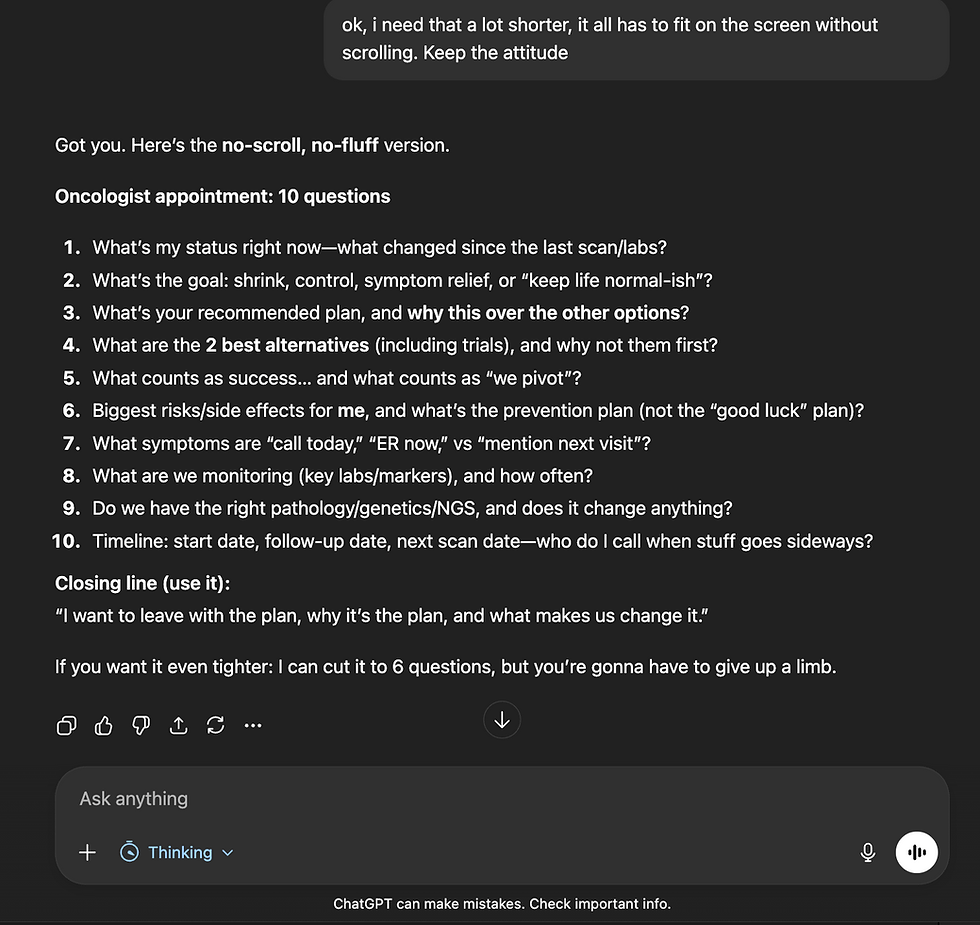
Before your next appointment, if you have shared some data with either ChatGPT or MDF, you can ask it to make you a list of questions to ask your doctor. This can be a HUGE help, especially when you are early in your diagnosis and don't know what to ask yet. You can ask it to give you a list of questions in general or about something specific. "Tell me about available clinical trials", "what should I ask my doctor", etc. Example:
Briefing a new doctor
When you get a second opinion, speak to a specialist, change doctors, etc., AI can help build you a summary to share so you aren't having to come up with it on your own.
Ask it to build you a snapshot, based on all of your interactions, uploads, etc, that you can share with a new doctor. The example below is very abbreviated but I wanted to show you what it could look like. It has summarized my diagnosis, meds, treatment history, imaging, tumor size, etc. I asked it to keep it on one screen, but this could give me a lot more detail if I was doing this for a new doctor appointment.

There are so many other ways that I use it but I didn't want to drown you! I figured a few examples that you can use right away would be most helpful.
I know this is a lot to absorb. I am always happy to help answer questions or give suggestions. My email is jburtrosen@gmail.com.
I highly recommend that you at least try one of the AI platforms and play around with it. You will learn a lot and if it is ever too much, just close the tab! It's so easy, just go in with a question, whatever it is.
I created my own bot, NET Sherpa, and I programmed it so if you say "hi" in the prompt box, it will ask you questions to get started. It's a bot for people with Neuroendocrine Tumors like me. I did it to take all the anxiety and guess work out of using it. A simple "hi" starts the entire interaction and it will ask you questions from there and refine the answers as you give it more info.
I also built another bot, Whole You Oncology, which can answer questions about integrative oncology treatments.
A quick aside, bots/agents, etc. are like question and answer platforms whereas the bigger platforms, like ChatGPT (sometimes referred to as an LLM - Large Language Model) are learning platforms. The best metaphor is that a bot is a waiter, you order and it brings you the food. ChatGPT, or the LLM, is like the chef who is constantly refining recipes, trying new things, learning, etc.
At the end of the day, I use AI to make me smarter and to do things that my doctors can't do (the human brain can only do so much!). Doctors bring the experience and AI can make you and your doctors smarter. I would never use AI instead of a doctor, or a doctor instead of AI, but together, they are even more powerful. We are all different as individuals and should do what we are comfortable with.
What excites me the most, is that AI will truly be able to recommend, diagnose, etc based on ME, Burt. Not based on the population, which is how most medical treatments are used now. For example, now there are cancer treatment guidelines from NCCN based on the population. In the future, because of AI, there will be cancer treatment guidelines for Burt, based on my unique diagnosis, my diet, lifestyle, where I live, income level, family structure, hobbies, etc. Imagine the possibilities!
For now, my team is me (and Krista), AI and my oncologist. I am very lucky and have a rock star team. As AI gets better (it's learned since you have started reading this!) the team will get even stronger.
Let me know how your AI explorations go!


Fantastic summary of an important - and complicated - topic. As usual, you cut straight to the point. No BS. No fluff. SUPER helpful. I'm using ChatGPT a lot but need some other resources because I'm dealing with some medical issues for my Dad. So appreciative of this and all you do to help the world be a better place
Burt,
This is great and hugely helpful. It is ironic that behemoth AI can zero into the uniqueness of one individual. We can be fearless with our questions. THANK YOU.
Thank you, Burt! I'm a frequent user of AI, too! This is a fabulous article! Thank you so much for sharing how AI can be a great member of our team! I'd love to chat more about building a bot one day! Karla from NCF
Burt, that is incredibly intersting. I am so glad you have found this great value in AI for your cancer and that it provides information really tailored to you. It is kind of incredible. I guess the old adage about quality in = quality out applies here, and I know you are able to navigate AI with lots of quality data for it to interpret and respond to. I am impressed you created your own bot, wait 2 bots!
Thanks for publishing this. It has me more excited about AI today knowing it is helping you. I wish you a healthy and happy 2026, Burt!